Blog

Your blog category

Blog

Career Growth Tips for Young Professionals | 12 Proven Strategies to Build a Successful Career in 2026

Discover the best career growth tips for young professionals. Learn how to develop new skills, build your network, improve productivity, and accelerate your career success in 2026. Career Growth Tips for Young Professionals: 12 Proven Strategies for Long-Term Success Starting your career is exciting, but it can also feel overwhelming. With rapidly changing technology, evolving workplace expectations, and increasing competition, young professionals need more than just a degree to succeed. Career growth isn’t about waiting for promotions—it’s about continuously learning, building valuable relationships, and taking ownership of your professional development. Whether you’re entering your first job or looking to move into a leadership role, these practical career growth tips will help you build a rewarding and successful career. Why Career Growth Matters Your career is one of the biggest investments you’ll ever make. Focusing on professional development can help you: Small improvements made consistently can lead to significant career progress over time. 1. Never Stop Learning The workplace changes rapidly, especially with the rise of Artificial Intelligence and digital technologies. Successful professionals make learning a lifelong habit. Consider improving your knowledge in: Learning just one new skill every year can dramatically increase your career opportunities. 2. Set Clear Career Goals Without goals, it’s difficult to measure progress. Create: Short-Term Goals Long-Term Goals Review your goals every six months and adjust them as your interests evolve. 3. Build Strong Communication Skills Technical knowledge is important, but communication often determines career advancement. Practice: Strong communicators are often trusted with greater responsibility. 4. Learn to Use AI Productively AI is becoming an essential workplace tool. Instead of fearing it, learn how to use AI to: Professionals who use AI effectively can often complete routine tasks faster and spend more time on strategic work. 5. Find a Mentor A mentor can provide guidance, share experiences, and help you avoid common career mistakes. A good mentor may help you: Don’t hesitate to ask experienced colleagues or industry professionals for advice. 6. Build Your Professional Network Many career opportunities come through professional relationships. Grow your network by: Networking isn’t about collecting contacts—it’s about building genuine relationships. 7. Develop Leadership Skills Early You don’t need to manage a team to demonstrate leadership. Show leadership by: Leadership qualities often lead to faster career advancement. 8. Ask for Feedback Constructive feedback helps you improve faster. Regularly ask your manager or colleagues: Use feedback as a tool for growth rather than criticism. 9. Manage Your Time Effectively Productive professionals focus on priorities rather than staying busy. Helpful habits include: Good time management reduces stress and improves work quality. 10. Build Your Personal Brand Your reputation matters. Develop a strong professional image by: A strong personal brand makes you more visible to recruiters and employers. 11. Stay Adaptable Industries continue to evolve with automation, remote work, and emerging technologies. Successful professionals embrace change by: Adaptability is one of the most valuable career skills today. 12. Maintain Work-Life Balance Career success should never come at the cost of your health. Protect your well-being by: A healthy professional is often more productive, creative, and resilient. Common Career Mistakes to Avoid Avoid these habits that can slow career growth: Recognizing these challenges early can help you stay on track. Frequently Asked Questions How can I grow my career faster? Focus on continuous learning, building strong communication skills, networking, taking initiative, and consistently delivering high-quality work. Is networking really important? Yes. Many career opportunities arise through professional relationships and referrals. Networking helps you learn from others and discover new opportunities. Which skills are most valuable in 2026? Employers increasingly value AI literacy, communication, leadership, critical thinking, adaptability, emotional intelligence, and problem-solving alongside technical expertise. Final Thoughts Career growth is a journey, not a race. The habits you build early in your career can shape your professional future for decades. Invest in learning, embrace new technologies, seek feedback, build meaningful relationships, and take ownership of your development. Success rarely comes from one big moment—it comes from consistent progress, curiosity, and resilience.


Blog

Healthy Snacks That Boost Energy | 15 Nutritious Snack Ideas for All-Day Energy & Better Health (2026 Guide)

Learn the best high-protein, fiber-rich snacks to stay energized, improve focus, and avoid energy crashes throughout the day. Healthy Snacks That Boost Energy: 15 Nutritious Foods to Keep You Going All Day Do you often feel tired between meals or reach for sugary snacks that leave you feeling sluggish an hour later? The good news is that the right snacks can provide steady energy, improve focus, and help you stay productive throughout the day. Why Healthy Snacking Matters Healthy snacking isn’t about eating more—it’s about eating smarter. Nutritious snacks can help: The key is choosing foods that fuel your body rather than causing rapid spikes and crashes in blood sugar. 1. Mixed Nuts A handful of almonds, walnuts, pistachios, or cashews provides healthy fats, protein, fiber, and important minerals like magnesium. Benefits Serving: One small handful (about 30g). 2. Greek Yogurt with Berries Greek yogurt is packed with protein, while berries provide antioxidants and natural sweetness. Benefits Choose plain yogurt and add fresh blueberries, strawberries, or raspberries. 3. Apple with Peanut Butter This classic combination balances natural carbohydrates with healthy fats and protein. Benefits Use natural peanut butter with no added sugar whenever possible. 4. Hard-Boiled Eggs Eggs are one of the most nutritious portable snacks available. Benefits Pair with cucumber or cherry tomatoes for extra nutrients. 5. Hummus with Vegetable Sticks Carrots, celery, cucumber, and bell peppers dipped in hummus create a colorful, nutrient-rich snack. Benefits 6. Oatmeal Energy Balls Homemade energy bites made with oats, dates, peanut butter, chia seeds, and nuts are perfect for busy days. Benefits They also make an excellent pre-workout snack. 7. Cottage Cheese with Fruit Cottage cheese contains protein and calcium, making it ideal for lasting energy. Try pairing it with: 8. Dark Chocolate and Almonds A small amount of dark chocolate (70% cocoa or higher) combined with almonds offers antioxidants and healthy fats. Benefits Enjoy in moderation. 9. Roasted Chickpeas Crunchy roasted chickpeas are rich in protein and fiber. Benefits Season with paprika, garlic powder, or herbs for extra flavor. 10. Banana with Nuts Bananas provide natural carbohydrates and potassium, while nuts add protein and healthy fats. This combination works particularly well before exercise or during busy afternoons. 11. Avocado on Whole-Grain Toast Avocados contain heart-healthy fats and fiber, while whole grains provide steady energy. Add chili flakes or a boiled egg for an extra nutritional boost. 12. Fresh Fruit Smoothie Blend together: This makes an excellent breakfast or post-workout snack. 13. Edamame Edamame is rich in plant protein, fiber, iron, and essential vitamins. It’s filling, nutritious, and easy to prepare. 14. Trail Mix Create your own trail mix using: Avoid mixes with added candy or excessive sugar. 15. Homemade Popcorn Air-popped popcorn is a whole grain that’s naturally high in fiber. Season with herbs or a light sprinkle of sea salt instead of butter. Healthy Snacking Tips Follow these simple habits to get the most from your snacks: Planning ahead helps you make healthier choices when hunger strikes. Common Mistakes to Avoid Many people accidentally turn healthy snacks into unhealthy habits. Avoid: Mindful eating helps you enjoy your food while preventing unnecessary calorie intake. Frequently Asked Questions What is the healthiest snack for energy? A combination of protein, healthy fats, and fiber—such as Greek yogurt with berries, mixed nuts, or an apple with peanut butter—can provide steady energy and help you feel satisfied. Are healthy snacks good for weight loss? Yes. Healthy snacks can reduce hunger between meals and make it easier to avoid overeating, especially when eaten in appropriate portions. How often should I snack? This depends on your lifestyle, activity level, and hunger. Some people do well with one or two nutritious snacks between meals, while others may not need snacks at all. Final Thoughts Healthy snacking is one of the simplest ways to support better energy, improved focus, and overall well-being. By choosing whole foods rich in protein, fiber, healthy fats, and essential nutrients, you can avoid energy crashes and stay productive throughout the day. Remember, lasting health is built through small, consistent choices. Preparing healthy snacks ahead of time and keeping nutritious options within reach can make it much easier to maintain healthy eating habits. Choose foods that nourish your body—and let every snack be another step toward a healthier, more energetic you. Related Articles (Internal Links) Continue your wellness journey with these helpful guides: Helpful Resources (External Links) Learn more about healthy eating from these trusted organizations:

Blog

Smart Money Habits to Build Before 40 | 10 Financial Habits for Long-Term Wealth and Financial Freedom (2026 Guide)

Build lasting wealth with these 10 smart money habits before turning 40. Learn practical budgeting, saving, investing, and debt management strategies for financial success. Smart Money Habits to Build Before 40 Money isn’t just about how much you earn—it’s about how well you manage it. Many financially successful people aren’t necessarily high earners; they’ve simply developed smart financial habits over time. Your 20s and 30s are the perfect years to establish strong money habits that will benefit you for decades. The earlier you start, the more time your savings and investments have to grow through the power of compound returns. Whether you’re beginning your financial journey or looking to improve your current habits, these 10 smart money habits can help you build financial confidence before you turn 40. Why Building Good Money Habits Early Matters Financial freedom doesn’t happen overnight. It is the result of consistent decisions made over many years. Developing healthy financial habits before 40 helps you: Small actions repeated consistently often produce bigger results than occasional large financial decisions. 1. Create and Follow a Monthly Budget A budget is one of the most powerful financial tools available. Instead of wondering where your money went each month, you’ll know exactly where it’s going. Track: A budget doesn’t restrict your spending—it gives your money a purpose. 2. Pay Yourself First One of the biggest mistakes people make is saving whatever is left at the end of the month. Instead, reverse the process. The moment you receive your income: Treat saving like any other monthly bill. Even saving 10–20% consistently can make a significant difference over time. 3. Build an Emergency Fund Unexpected expenses happen to everyone. Medical bills, car repairs, job loss, or home maintenance can quickly become stressful without savings. Aim to build an emergency fund that covers three to six months of essential living expenses. Keep this money in an easily accessible savings account so it’s available when you truly need it. 4. Avoid High-Interest Debt Not all debt is bad, but high-interest debt—especially from credit cards—can slow your financial progress. To reduce debt: Reducing high-interest debt frees up more money for saving and investing. 5. Start Investing Early One of the greatest advantages you have is time. The earlier you begin investing, the more your money can benefit from compound growth. Consider diversified investments that align with your goals, risk tolerance, and investment horizon. If you’re unsure where to begin, seek guidance from a qualified financial adviser. Remember: Time in the market is often more valuable than trying to perfectly time the market. 6. Live Below Your Means Many people increase their spending every time their income increases. Instead, try to maintain your lifestyle while directing extra income toward savings and investments. This habit helps build wealth faster and prevents lifestyle inflation. Ask yourself before making large purchases: “Do I need this, or do I simply want it?” 7. Set Clear Financial Goals Money without a plan often disappears quickly. Set both short-term and long-term goals. Examples include: Short-Term Goals Long-Term Goals Clear goals provide motivation and direction. 8. Continue Learning About Personal Finance Financial education is one of the best investments you can make. Read books, listen to podcasts, attend webinars, or follow trusted financial educators. Topics worth learning include: The more you understand money, the more confident your financial decisions become. 9. Review Your Finances Regularly Your financial situation changes over time. Review your finances every month by checking: Small adjustments made regularly can prevent larger problems later. 10. Protect Your Financial Future Building wealth isn’t only about earning and investing—it’s also about protecting what you’ve built. Consider: Having appropriate protection can help reduce the financial impact of unexpected events. Common Money Mistakes to Avoid Many people delay financial planning because they believe they have plenty of time. Avoid these common mistakes: Recognizing these habits early can save you significant stress and money. Frequently Asked Questions How much should I save each month? A common guideline is to save at least 20% of your income if possible. However, the right amount depends on your income, expenses, and financial goals. The most important step is to save consistently. Is it too late to start investing at 35? Not at all. While starting earlier provides more time for growth, beginning at 35 can still help you build meaningful long-term wealth. Consistency and a long-term perspective are key. Should I pay off debt before investing? It depends on the type of debt. High-interest debt often deserves priority because its cost can outweigh potential investment returns. A financial adviser can help you decide on an approach suited to your situation. Final Thoughts Building wealth isn’t about making perfect financial decisions every day—it’s about making smart decisions consistently over time. By budgeting wisely, saving regularly, investing early, managing debt responsibly, and continuing to improve your financial knowledge, you’ll create a stronger financial future before you reach 40. Remember, financial success isn’t measured by how much you earn. It’s measured by how effectively you manage, protect, and gro Helpful Resources If you’d like to deepen your financial knowledge, these trusted resources offer practical guidance and educational content: Disclaimer This article is intended for educational and informational purposes only and should not be considered financial, investment, tax, or legal advice. Every individual’s financial situation is unique. Before making significant financial decisions, consult a qualified financial advisor or other appropriate professional.

Blog

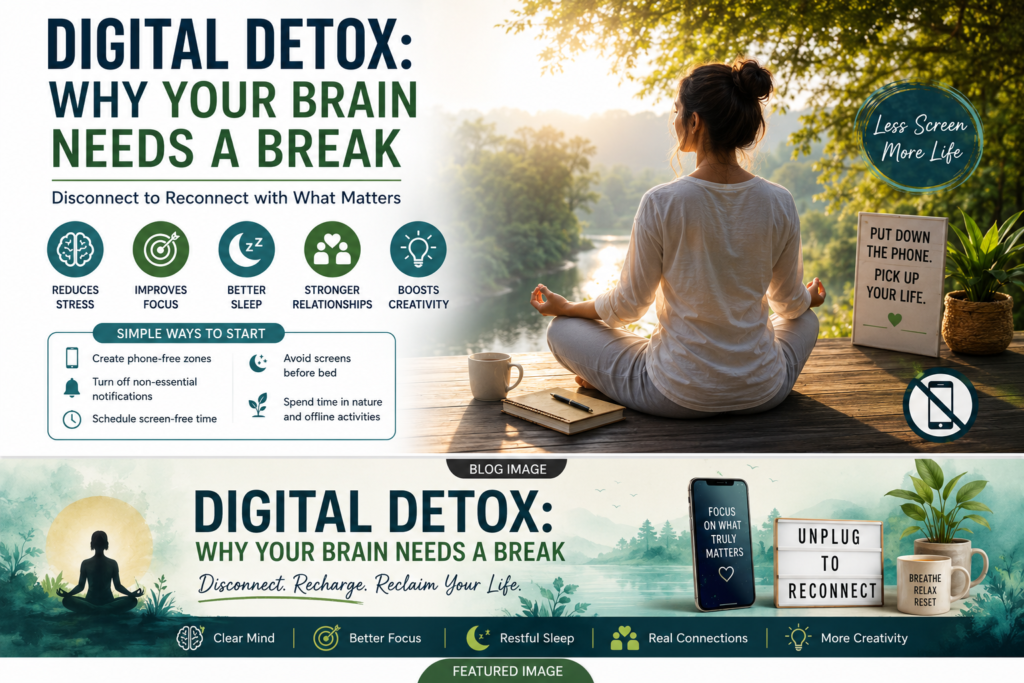
Digital Detox: Why Your Brain Needs a Break | Benefits, Tips & Simple Daily Habits (2026 Guide)

Meta Description: Learn why a digital detox is essential for your mental health, focus, and productivity. Discover simple ways to reduce screen time and reclaim your attention. Digital Detox: Why Your Brain Needs a Break In today’s hyper-connected world, checking your phone has become second nature. Whether it’s scrolling through social media, responding to work emails, watching videos, or browsing the internet, our brains rarely get a chance to rest. While technology has made life easier, constant digital stimulation can leave us feeling mentally exhausted, distracted, and overwhelmed. This is where a digital detox comes in. A digital detox doesn’t mean giving up your smartphone or deleting every social media account. Instead, it’s about creating healthier boundaries with technology so your brain can recharge, improve focus, and enjoy more meaningful moments offline. Let’s explore why your brain needs regular breaks from screens and how you can build healthier digital habits. What Is a Digital Detox? A digital detox is the intentional reduction of time spent using digital devices such as smartphones, tablets, computers, televisions, and social media platforms. The goal isn’t to avoid technology completely—it’s to use it more intentionally. Think of it like giving your mind a mini vacation from constant notifications, endless scrolling, and information overload. Why Does Your Brain Need a Break? Every notification, email, message, and social media update competes for your attention. Over time, this constant stream of information can contribute to mental fatigue. Research shows that digital environments can positively connect people and improve access to information, but excessive or unhealthy digital use may also contribute to stress, sleep disruption, anxiety, and other mental health challenges. Health organizations encourage healthier digital habits rather than complete disconnection. Here are some common signs your brain may need a digital break: If these sound familiar, you’re not alone. Benefits of a Digital Detox 1. Improves Focus and Concentration Every interruption forces your brain to switch tasks. Reducing digital distractions allows you to concentrate for longer periods and complete work more efficiently. Many people notice they can read books, finish projects, and think more clearly after reducing unnecessary screen time. 2. Reduces Stress and Anxiety Constant notifications keep your brain in a state of alertness. Taking scheduled breaks from screens can help lower stress levels and reduce the feeling that you must always be available. 3. Improves Sleep Quality Using phones before bedtime exposes your eyes to bright light and encourages continued mental stimulation. Replacing late-night scrolling with reading, meditation, or quiet reflection can make it easier to fall asleep and wake up feeling refreshed. 4. Strengthens Relationships Have you ever sat with friends or family while everyone looked at their phones? A digital detox encourages face-to-face conversations and deeper connections. Simple habits like device-free dinners or phone-free family time can strengthen relationships significantly. 5. Boosts Creativity When we’re constantly consuming information, our brains have little space to create. Moments of boredom often lead to new ideas. Walking without your phone or simply sitting quietly allows your mind to wander creatively. Simple Ways to Start a Digital Detox You don’t need to disappear from the internet for a week. Start small. Create Phone-Free Zones Keep phones away from: Turn Off Non-Essential Notifications Do you really need every shopping app, game, and social media platform sending alerts? Disable notifications that don’t add value. You’ll be surprised how much calmer your day feels. Schedule Screen-Free Time Choose one hour each day to disconnect. During that hour: Consistency matters more than duration. Avoid Screens Before Bed Try putting your phone away at least 30–60 minutes before sleeping. Instead: Your brain will thank you. Track Your Screen Time Most smartphones include built-in screen time or digital wellbeing features. Review your usage once a week. You may discover that small changes can free up several hours every month. Digital Detox Doesn’t Mean Quitting Technology Technology is an incredible tool. It helps us learn, work, communicate, and stay connected. The goal isn’t to eliminate technology—it’s to make sure you’re using technology instead of letting it use you. Healthy digital habits include: Balance is the key. Frequently Asked Questions How long should a digital detox last? It depends on your goals. Some people start with one hour each day, while others enjoy a screen-free afternoon each weekend. The most effective approach is one you can maintain consistently. Can a digital detox improve mental health? A digital detox isn’t a treatment for mental health conditions, but many people find that reducing unnecessary screen time helps improve focus, sleep, and stress management. It works best as part of an overall healthy lifestyle. Is social media bad? Not necessarily. Social media can help people stay connected, learn new skills, and build communities. Problems are more likely to arise when use becomes excessive or starts replacing healthy offline activities. Final Thoughts Your brain works hard every single day. Giving it regular breaks from constant digital stimulation isn’t about rejecting technology—it’s about protecting your attention, energy, and well-being. Start with one small change today. Turn off unnecessary notifications, enjoy a phone-free meal, or spend 30 minutes outdoors without checking your screen. Small habits, repeated consistently, can help you build a healthier relationship with technology and create more space for focus, creativity, and meaningful connections. Helpful Resources

Blog

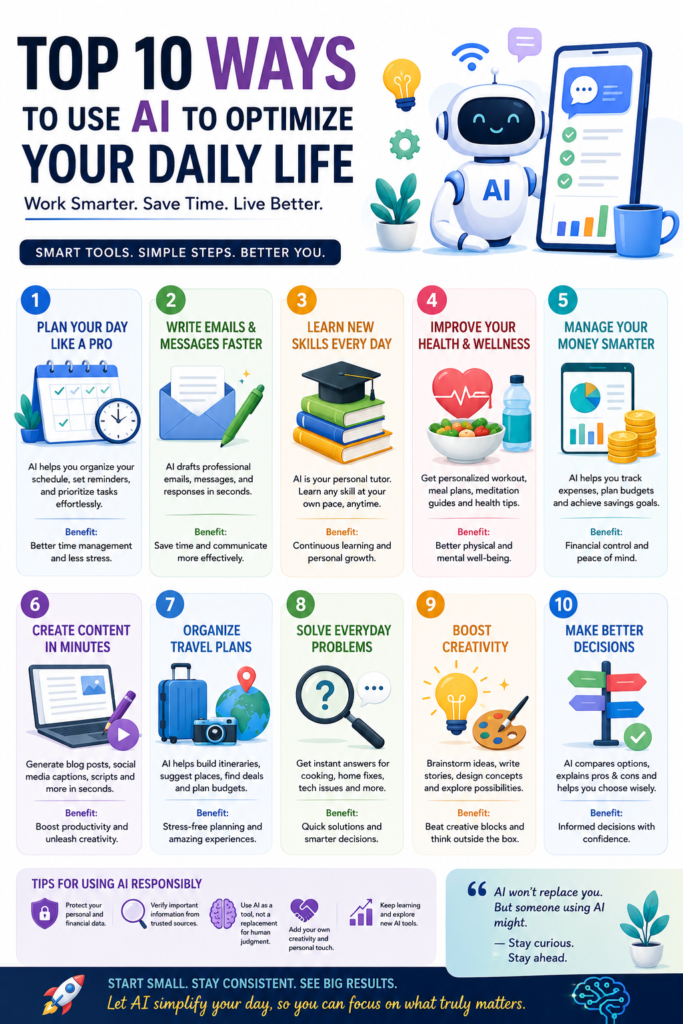
Top 10 Ways to Use AI to Optimize Your Daily Life

Artificial Intelligence (AI) is no longer just for tech experts or large companies. In 2026, AI has become an everyday tool that helps millions of people save time, stay organized, improve productivity, and make smarter decisions. Here are 10 practical ways to use AI to make your everyday life easier. 1. Plan Your Day Like a Personal Assistant AI can organize your schedule, prioritize tasks, and remind you of important meetings and deadlines. Use AI to: Benefit: Less stress and better time management. 2. Write Emails and Messages Faster Instead of spending time thinking about how to write the perfect email, AI can help you draft professional, friendly, or persuasive messages in seconds. AI can help with: Benefit: Save time while communicating more effectively. 3. Learn New Skills Every Day AI acts like a personal tutor that is available 24/7. You can learn: Ask questions, request quizzes, or get step-by-step explanations tailored to your level. Benefit: Continuous learning at your own pace. 4. Improve Your Health and Wellness AI can help you build healthier habits by supporting your wellness goals. Examples include: Benefit: Better physical and mental well-being. 5. Manage Your Money Smarter AI can simplify personal finance by helping you: It can also explain financial concepts in simple language. Benefit: Greater financial confidence and control. 6. Create Content in Minutes Whether you’re a blogger, freelancer, entrepreneur, or content creator, AI can speed up content creation. Generate: Always review and personalize AI-generated content to match your voice. Benefit: Increased productivity and creativity. 7. Organize Travel Plans Planning a trip becomes easier with AI. Use it to: Benefit: Stress-free travel planning. 8. Solve Everyday Problems Need quick help? AI can explain: Think of AI as a knowledgeable assistant ready to help whenever you need it. Benefit: Faster problem-solving. 9. Boost Creativity AI isn’t here to replace creativity—it helps spark it. Use AI to: The final creative decisions are still yours. Benefit: Beat creative blocks and explore new ideas. 10. Make Better Decisions AI can help organize information, compare options, and summarize complex topics. For example, you can ask AI to compare: AI helps you evaluate the pros and cons, making it easier to choose what best fits your needs. Benefit: More informed decisions with less research time. Tips for Using AI Responsibly To get the most value from AI: Responsible use ensures AI remains a helpful partner rather than something you rely on blindly. Final Thoughts Artificial Intelligence is transforming how we work, learn, communicate, and manage our daily lives. You don’t need to be a technology expert to benefit from it. By using AI for planning, learning, wellness, finances, creativity, and decision-making, you can save valuable time and reduce everyday stress. The most successful AI users aren’t those who know the most about technology—they’re the ones who know how to ask the right questions and apply AI thoughtfully to real-life situations. Start with one or two of these ideas today, and you’ll quickly discover how AI can become a practical companion for a more productive, organized, and fulfilling life.

Blog

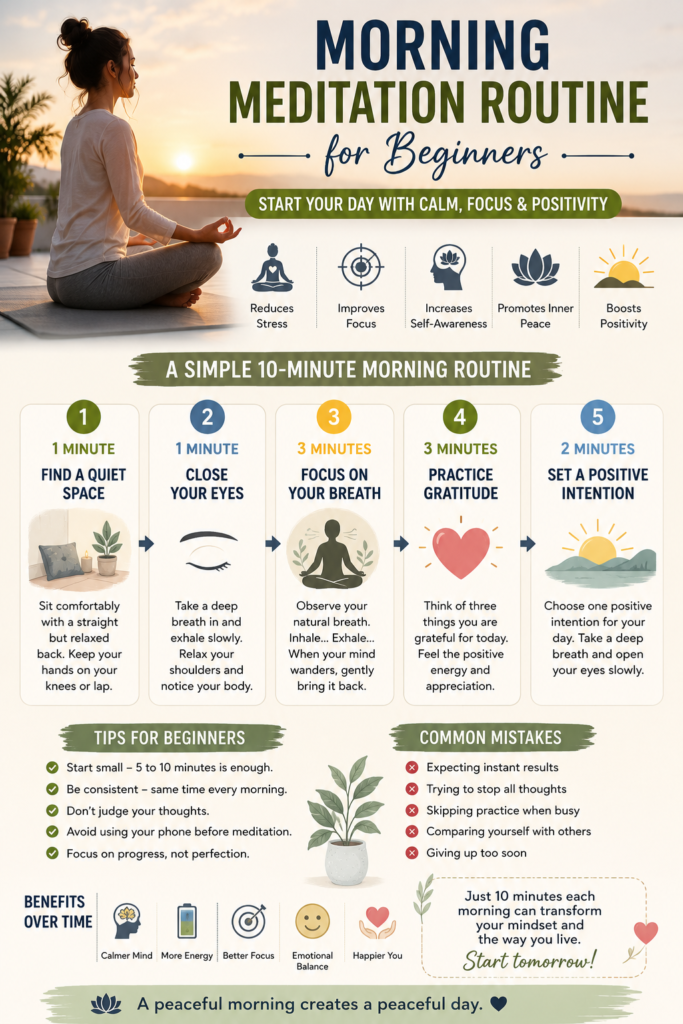
Morning Meditation Routine for Beginners | Easy 10-Minute Daily Practice

Imagine starting your day feeling calm, focused, and energized instead of rushing through your morning feeling stressed. That’s exactly what a simple morning meditation routine can do. The best part? You don’t need years of experience or a special meditation room. Just 10 minutes each morning can significantly improve your mental well-being, concentration, and emotional balance. Whether you’re completely new to meditation or trying to build a healthier morning habit, this beginner-friendly guide will help you get started. Why Meditate in the Morning? Your mind is naturally quieter shortly after waking up. Morning meditation helps you set a positive tone before emails, work, social media, and daily responsibilities begin competing for your attention. Benefits of Morning Meditation Just a few minutes each day can make a meaningful difference over time. A Simple 10-Minute Morning Meditation Routine Minute 1: Find a Quiet Space Choose a comfortable place where you won’t be interrupted. Sit on a chair, cushion, or yoga mat with your back straight but relaxed. You don’t need to sit cross-legged if that’s uncomfortable. Keep your hands resting gently on your knees or in your lap. Minute 2: Close Your Eyes Take a slow, deep breath through your nose. Exhale gently through your mouth. Allow your shoulders to relax. Notice how your body feels without trying to change anything. Minutes 3–5: Focus on Your Breath Breathe naturally. Simply observe: When your mind wanders—which it naturally will—gently return your attention to your breathing without judging yourself. Remember: Meditation isn’t about stopping your thoughts. It’s about noticing them and returning your focus. Minutes 6–8: Practice Gratitude Think of three things you’re grateful for today. They can be simple: Allow yourself to truly appreciate each one. Gratitude helps shift your attention from what’s lacking to what is already meaningful in your life. Minutes 9–10: Set a Positive Intention Before opening your eyes, choose one intention for your day. Examples include: Take one final deep breath. Open your eyes slowly. Carry that intention with you throughout the day. Tips for Beginners Starting a meditation practice doesn’t have to be complicated. Keep these tips in mind: The goal isn’t to have a perfectly quiet mind—it’s to build a healthier relationship with your thoughts. Common Mistakes to Avoid Many beginners think they’re “bad” at meditation. In reality, these experiences are completely normal. Avoid these common mistakes: Like any skill, meditation becomes easier with regular practice. Helpful Meditation Apps for Beginners If you’d like extra guidance, these apps offer beginner-friendly sessions: Many include free guided meditations ranging from 5 to 15 minutes. Frequently Asked Questions How long should beginners meditate? Start with 5–10 minutes each morning. As you become more comfortable, you can gradually increase the duration. Is it okay if my mind keeps wandering? Absolutely. Wandering thoughts are a normal part of meditation. Simply notice them and return your attention to your breath. Should I meditate before or after breakfast? Most people find it easier to meditate before breakfast, when the mind is fresh and there are fewer distractions. Can I meditate lying down? You can, but sitting upright helps you stay alert and reduces the chance of falling asleep. Final Thoughts Meditation isn’t about becoming someone different—it’s about becoming more present with who you already are. By dedicating just ten minutes each morning to stillness, breathing, and gratitude, you create a strong foundation for a calmer, more focused, and fulfilling day. Remember, consistency matters more than duration. Even a short daily practice can lead to lasting improvements in your mental well-being. Start tomorrow morning. Sit quietly, take a deep breath, and give yourself the gift of a peaceful beginning.

Blog

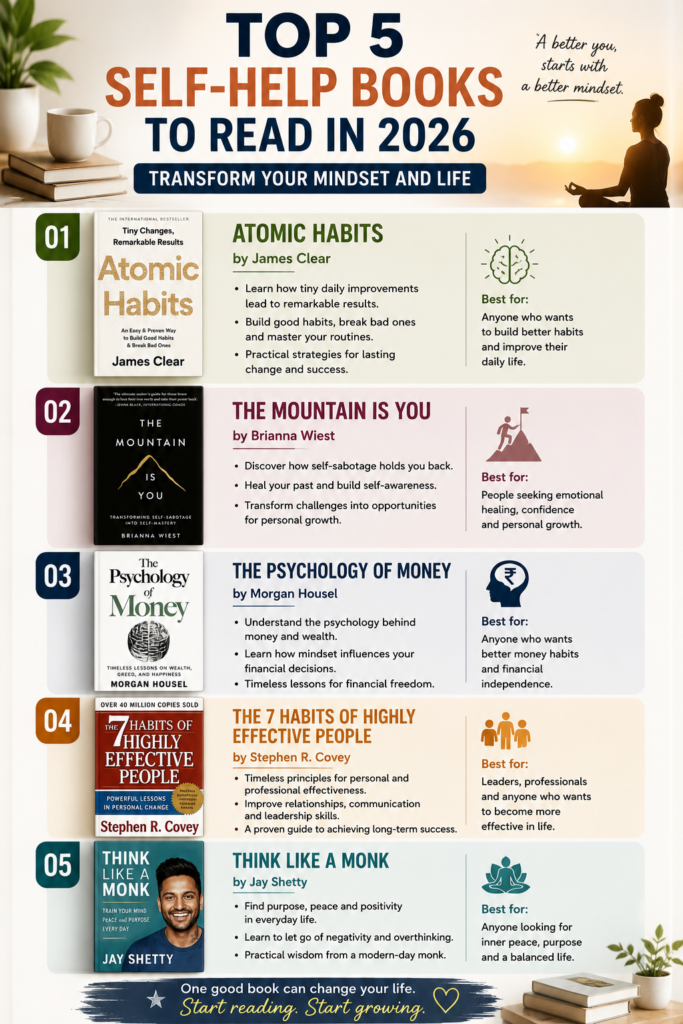
Top 5 Self-Help Books to Read in 2026: Transform Your Mindset and Life

The demand for self-improvement books continues to grow as more people seek practical ways to improve their mental well-being, productivity, relationships, and overall happiness. Whether you’re looking to build better habits, manage stress, or unlock your full potential, these five books remain among the most recommended reads in 2026. 1. Atomic Habits by James Clear If there’s one book that consistently tops self-help recommendations, it’s Atomic Habits. James Clear explains how tiny daily improvements can lead to extraordinary long-term results. Why You Should Read It Perfect For: Students, professionals, entrepreneurs, and anyone looking to create lasting positive habits. Key Takeaway:“You do not rise to the level of your goals. You fall to the level of your systems.” 2. The Mountain Is You by Brianna Wiest 4 This bestselling book focuses on overcoming self-sabotage and emotional healing. Brianna Wiest explains how our greatest obstacles often come from within—and how to transform them into opportunities for growth. Why You Should Read It Perfect For: Anyone experiencing burnout, anxiety, or feeling stuck in life. 3. The Psychology of Money by Morgan Housel 4 Money isn’t just about numbers—it’s about behavior. Morgan Housel explores how psychology influences financial decisions and why mindset often matters more than intelligence when building wealth. Why You Should Read It Perfect For: Young professionals, investors, families, and anyone wanting financial freedom. 4. The 7 Habits of Highly Effective People by Stephen R. Covey A timeless classic, this book continues to inspire millions by teaching principles for personal and professional success. Why You Should Read It Perfect For: Managers, leaders, business owners, and personal development enthusiasts. 5. Think Like a Monk by Jay Shetty Drawing on his experience as a former monk, Jay Shetty shares practical wisdom for reducing stress, finding purpose, and living with greater peace and clarity. Why You Should Read It Perfect For: Anyone seeking balance, inner peace, and a more intentional life. Which Book Should You Read First? Your Goal Recommended Book Build better habits Atomic Habits Improve mental health The Mountain Is You Learn about money The Psychology of Money Become more productive The 7 Habits of Highly Effective People Reduce stress and find purpose Think Like a Monk Final Thoughts The best self-help book is the one you’ll actually read and apply. These five titles have remained popular because they offer practical advice backed by real-world experience and timeless principles. Rather than trying to read them all at once, choose the one that best matches your current goals and put its lessons into practice. Small, consistent changes inspired by the right book can lead to meaningful improvements in your health, mindset, relationships, finances, and career.

Blog

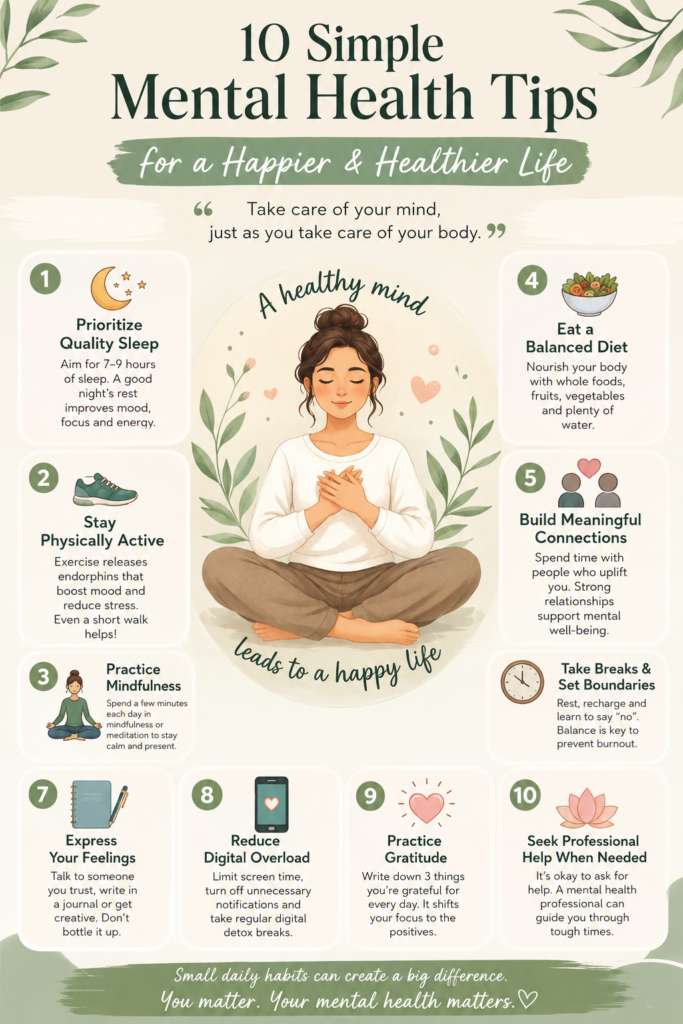
10 Simple Mental Health Tips for a Happier and Healthier Life

10 Simple Mental Health Tips for a Happier and Healthier Life In today’s fast-paced world, taking care of our mental health is just as important as looking after our physical health. Daily responsibilities, work pressure, family commitments, and constant exposure to social media can leave us feeling overwhelmed. The good news is that small, consistent habits can make a big difference in improving our emotional well-being. Here are ten practical mental health tips that anyone can incorporate into their daily routine. 1. Prioritize Quality Sleep A good night’s sleep is essential for emotional balance and mental clarity. Adults should aim for 7–9 hours of quality sleep each night. Create a relaxing bedtime routine by avoiding screens before bed, limiting caffeine in the evening, and maintaining a consistent sleep schedule. 2. Stay Physically Active Exercise isn’t just good for your body—it benefits your mind too. Physical activity releases endorphins, often called “feel-good hormones,” which help reduce stress and improve mood. Even a 20–30 minute walk can make a noticeable difference. 3. Practice Mindfulness Mindfulness helps you stay present and reduces overthinking. Spend a few minutes each day focusing on your breathing, meditating, or simply observing your surroundings without judgment. These practices can help calm the mind and reduce anxiety. 4. Eat a Balanced Diet The food you eat affects your mood and energy levels. Include plenty of fruits, vegetables, whole grains, lean proteins, and healthy fats in your meals. Stay hydrated throughout the day and try to limit processed foods and excessive sugar. 5. Build Meaningful Connections Strong relationships provide emotional support during difficult times. Make time to connect with family, friends, or colleagues. A meaningful conversation or shared activity can help reduce feelings of loneliness and improve overall well-being. 6. Take Breaks and Set Boundaries Working continuously without rest can lead to burnout. Schedule regular breaks during the day, learn to say “no” when necessary, and create healthy boundaries between work and personal life. 7. Express Your Feelings Bottling up emotions can increase stress. Talk to someone you trust, write in a journal, or engage in creative activities like drawing, painting, or music. Expressing your feelings can provide relief and improve emotional resilience. 8. Reduce Digital Overload Constant notifications and excessive screen time can contribute to stress and anxiety. Consider setting specific times to check social media, turning off unnecessary notifications, and enjoying regular digital detox periods. 9. Practice Gratitude Focusing on positive aspects of life can shift your mindset. Each day, write down three things you’re grateful for. This simple habit can increase happiness, reduce stress, and improve emotional well-being over time. 10. Don’t Hesitate to Seek Professional Help Everyone experiences difficult periods in life. If feelings of sadness, anxiety, or stress persist and begin affecting your daily activities, reaching out to a mental health professional is a sign of strength—not weakness. Early support can make a significant difference. Final Thoughts Mental health is an ongoing journey, not a destination. Small daily habits practiced consistently can have a lasting impact on your emotional well-being. Remember that it’s okay to have difficult days, and it’s equally important to ask for help when needed. Take one step today—whether it’s going for a walk, calling a friend, practicing mindfulness, or simply getting enough rest. Every positive action you take is an investment in a healthier, happier you. Remember: Taking care of your mind is one of the most valuable forms of self-care. Prioritize your mental well-being because a healthy mind creates the foundation for a fulfilling life.

Blog

Best Countries to Visit in Summer (2026): Top 5 Destinations for an Unforgettable Vacation

Summer is the perfect season to pack your bags, leave your daily routine behind, and explore the world. Whether you dream of relaxing on a sunny beach, hiking through breathtaking mountains, or discovering fascinating cultures, there is a destination waiting for you. But with so many amazing places to choose from, deciding where to travel can feel overwhelming. To make your planning easier, we’ve put together a list of the best countries to visit in summer. These destinations offer incredible weather, unforgettable attractions, delicious local cuisine, and experiences that will stay with you long after your vacation ends. 1. Italy – A Timeless Summer Escape Italy has something for every traveler. History lovers can explore ancient landmarks in Rome, art enthusiasts can admire Florence’s masterpieces, and beach lovers can unwind along the stunning Amalfi Coast or Sicily. Summer is also festival season, making it the perfect time to enjoy outdoor concerts, local markets, and authentic Italian food. Don’t leave without trying freshly made pasta, wood-fired pizza, and creamy gelato. Best for: Couples, families, food lovers, and history enthusiasts. 2. Greece – Paradise in the Mediterranean Greece is one of Europe’s most popular summer destinations, and it’s easy to see why. Crystal-clear waters, charming whitewashed villages, breathtaking sunsets, and warm hospitality make it a dream vacation spot. Visit Santorini for spectacular views, Mykonos for vibrant nightlife, or Crete for beautiful beaches and rich history. Every island has its own unique personality. Best for: Beach vacations, honeymoon trips, island hopping, and photography. 3. Switzerland – Cool Weather and Alpine Adventures If you’re looking to escape extreme summer temperatures, Switzerland is an excellent choice. The Swiss Alps offer spectacular hiking trails, scenic train rides, mountain villages, and turquoise lakes that look straight out of a postcard. Adventure lovers can enjoy mountain biking, paragliding, and cable car rides, while those seeking relaxation can simply soak in the peaceful scenery. Best for: Nature lovers, families, and adventure seekers. 4. Japan – A Blend of Tradition and Innovation Japan offers a fascinating mix of ancient traditions and modern cities. Summer is filled with colorful festivals, fireworks, and cultural celebrations that attract visitors from around the world. Explore the vibrant streets of Tokyo, discover Kyoto’s historic temples, enjoy Osaka’s famous street food, or visit Hokkaido if you prefer cooler temperatures and beautiful flower fields. Best for: Culture lovers, food enthusiasts, and first-time visitors to Asia. 5. Canada – Nature at Its Best Canada transforms into an outdoor paradise during the summer months. Visit Banff National Park for breathtaking mountain scenery, kayak across Lake Louise, or explore vibrant cities like Vancouver, Toronto, and Montreal. Whether you enjoy hiking, wildlife spotting, road trips, or city adventures, Canada has something for everyone. Best for: Outdoor adventures, family vacations, and photography. 6. Spain – Sun, Beaches, and Vibrant Culture Spain is famous for its lively atmosphere, beautiful coastline, and delicious cuisine. Barcelona offers stunning architecture, Madrid is full of history and museums, while Mallorca and Ibiza are perfect for beach holidays. Summer is also the season for colorful festivals, music events, and late-night dining experiences. Best for: Friends, couples, beach lovers, and foodies. 7. Norway – Experience the Midnight Sun If you’re looking for something unique, Norway should be on your travel bucket list. During summer, parts of the country experience the magical Midnight Sun, where daylight lasts almost 24 hours. Cruise through breathtaking fjords, hike dramatic mountain trails, or simply enjoy the peaceful beauty of Scandinavian nature. Best for: Adventure travelers, photographers, and nature enthusiasts. 8. Australia – A Different Kind of Summer Escape While it’s winter in Australia during the Northern Hemisphere’s summer, many regions offer mild temperatures that are perfect for sightseeing. Explore Sydney’s iconic landmarks, visit Melbourne’s vibrant cafés, or drive along the spectacular Great Ocean Road. Australia is ideal if you prefer avoiding large tourist crowds. Best for: Road trips, wildlife lovers, and city explorers. 9. Iceland – Land of Fire and Ice Iceland is one of the most unique destinations you can visit. Summer brings long daylight hours, making it easier to explore waterfalls, glaciers, volcanoes, black sand beaches, and geothermal hot springs. The country’s dramatic landscapes make it a paradise for photographers and adventure seekers. Best for: Nature lovers, couples, and adventure travel. 10. Thailand – Tropical Beauty on a Budget Thailand remains one of the world’s most affordable and exciting travel destinations. Visit Bangkok for its bustling markets, Phuket and Krabi for stunning beaches, or Chiang Mai for temples and mountain scenery. The country’s delicious street food and friendly locals make every trip memorable. Best for: Budget travelers, solo travelers, and beach vacations. Tips for Planning Your Summer Vacation To make the most of your trip, keep these travel tips in mind: How to Choose the Best Summer Destination Choosing the perfect destination depends on your travel style. Think about your budget, preferred weather, interests, and travel companions before making your decision. Final Thoughts The world is full of incredible places to explore, and summer is one of the best times to experience them. Whether you’re wandering through Italy’s historic streets, relaxing on the beaches of Greece, hiking in the Swiss Alps, or discovering Japan’s vibrant culture, every destination offers something special. The best summer vacation isn’t just about the place—it’s about the memories you create, the people you meet, and the experiences that stay with you forever. Start planning early, travel responsibly, and make this summer one you’ll never forget. Frequently Asked Questions (FAQ) Which country is best for a summer vacation? Italy, Greece, Switzerland, Japan, and Canada are among the best countries to visit in summer due to their pleasant weather and diverse attractions. Which country is best for budget travelers? Thailand offers excellent value with affordable accommodation, transportation, food, and activities. Which country has the coolest weather in summer? Switzerland, Norway, Iceland, and parts of Canada offer cooler temperatures, making them ideal for travelers looking to escape the heat. What is the best time to book a summer vacation?

Scroll to Top