Imagine starting your day feeling calm, focused, and energized instead of rushing through your morning feeling stressed. That’s exactly what a simple morning meditation routine can do.
The best part? You don’t need years of experience or a special meditation room. Just 10 minutes each morning can significantly improve your mental well-being, concentration, and emotional balance.
Whether you’re completely new to meditation or trying to build a healthier morning habit, this beginner-friendly guide will help you get started.
Why Meditate in the Morning?
Your mind is naturally quieter shortly after waking up. Morning meditation helps you set a positive tone before emails, work, social media, and daily responsibilities begin competing for your attention.
Benefits of Morning Meditation
- Reduces stress and anxiety
- Improves focus and concentration
- Increases self-awareness
- Enhances emotional resilience
- Boosts productivity throughout the day
- Promotes better sleep at night
- Creates a sense of inner peace
Just a few minutes each day can make a meaningful difference over time.
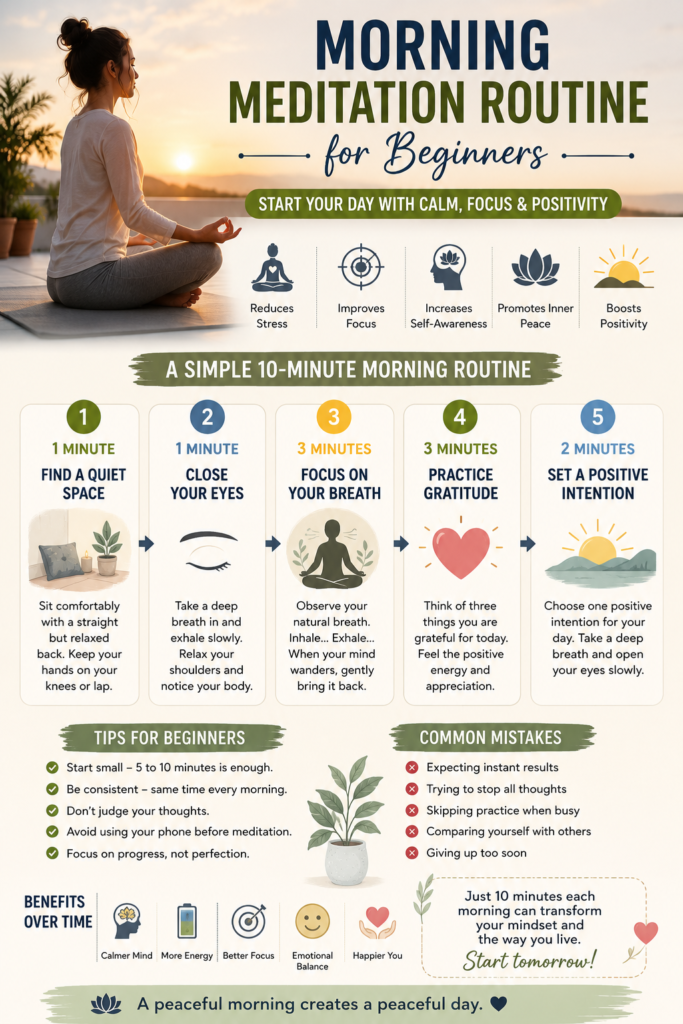
A Simple 10-Minute Morning Meditation Routine
Minute 1: Find a Quiet Space
Choose a comfortable place where you won’t be interrupted. Sit on a chair, cushion, or yoga mat with your back straight but relaxed.
You don’t need to sit cross-legged if that’s uncomfortable.
Keep your hands resting gently on your knees or in your lap.
Minute 2: Close Your Eyes
Take a slow, deep breath through your nose.
Exhale gently through your mouth.
Allow your shoulders to relax.
Notice how your body feels without trying to change anything.
Minutes 3–5: Focus on Your Breath
Breathe naturally.
Simply observe:
- The air entering your nose
- Your chest rising
- Your belly expanding
- The slow exhale
When your mind wanders—which it naturally will—gently return your attention to your breathing without judging yourself.
Remember: Meditation isn’t about stopping your thoughts. It’s about noticing them and returning your focus.
Minutes 6–8: Practice Gratitude
Think of three things you’re grateful for today.
They can be simple:
- Your health
- Your family
- A peaceful morning
- A cup of coffee
- The opportunity to learn something new
Allow yourself to truly appreciate each one.
Gratitude helps shift your attention from what’s lacking to what is already meaningful in your life.
Minutes 9–10: Set a Positive Intention
Before opening your eyes, choose one intention for your day.
Examples include:
- Today I choose peace.
- I will respond with patience.
- I am capable of handling challenges.
- I will be kind to myself.
- I choose progress over perfection.
Take one final deep breath.
Open your eyes slowly.
Carry that intention with you throughout the day.
Tips for Beginners
Starting a meditation practice doesn’t have to be complicated. Keep these tips in mind:
- Meditate at the same time every morning.
- Start with just five to ten minutes.
- Don’t worry if your mind wanders.
- Avoid checking your phone before meditating.
- Be patient with yourself.
- Focus on consistency rather than perfection.
The goal isn’t to have a perfectly quiet mind—it’s to build a healthier relationship with your thoughts.
Common Mistakes to Avoid
Many beginners think they’re “bad” at meditation. In reality, these experiences are completely normal.
Avoid these common mistakes:
- Expecting instant results
- Trying to eliminate all thoughts
- Skipping practice after one busy morning
- Comparing yourself to experienced meditators
- Giving up too soon
Like any skill, meditation becomes easier with regular practice.
Helpful Meditation Apps for Beginners
If you’d like extra guidance, these apps offer beginner-friendly sessions:
- Headspace
- Calm
- Insight Timer
- Balance
- Healthy Minds Program
Many include free guided meditations ranging from 5 to 15 minutes.
Frequently Asked Questions
How long should beginners meditate?
Start with 5–10 minutes each morning. As you become more comfortable, you can gradually increase the duration.
Is it okay if my mind keeps wandering?
Absolutely. Wandering thoughts are a normal part of meditation. Simply notice them and return your attention to your breath.
Should I meditate before or after breakfast?
Most people find it easier to meditate before breakfast, when the mind is fresh and there are fewer distractions.
Can I meditate lying down?
You can, but sitting upright helps you stay alert and reduces the chance of falling asleep.
Final Thoughts
Meditation isn’t about becoming someone different—it’s about becoming more present with who you already are.
By dedicating just ten minutes each morning to stillness, breathing, and gratitude, you create a strong foundation for a calmer, more focused, and fulfilling day.
Remember, consistency matters more than duration. Even a short daily practice can lead to lasting improvements in your mental well-being.
Start tomorrow morning. Sit quietly, take a deep breath, and give yourself the gift of a peaceful beginning.