Discover the best career growth tips for young professionals. Learn how to develop new skills, build your network, improve productivity, and accelerate your career success in 2026.
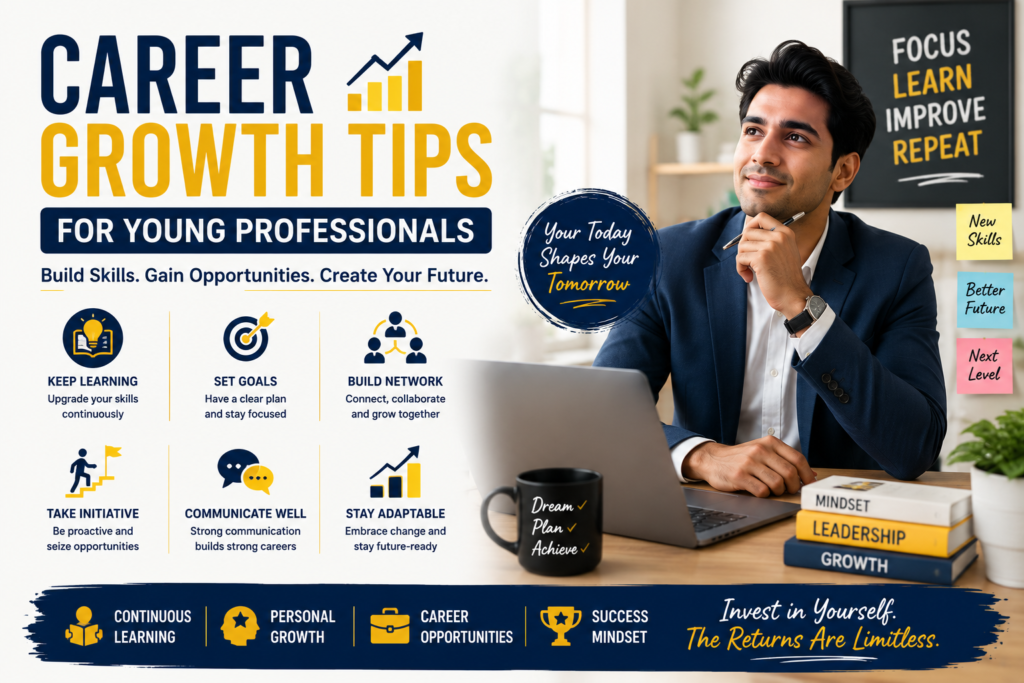
Career Growth Tips for Young Professionals: 12 Proven Strategies for Long-Term Success
Starting your career is exciting, but it can also feel overwhelming. With rapidly changing technology, evolving workplace expectations, and increasing competition, young professionals need more than just a degree to succeed.
Career growth isn’t about waiting for promotions—it’s about continuously learning, building valuable relationships, and taking ownership of your professional development.
Whether you’re entering your first job or looking to move into a leadership role, these practical career growth tips will help you build a rewarding and successful career.
Why Career Growth Matters
Your career is one of the biggest investments you’ll ever make.
Focusing on professional development can help you:
- Increase your earning potential
- Develop valuable skills
- Build confidence
- Create better job opportunities
- Achieve long-term financial stability
- Improve work satisfaction
Small improvements made consistently can lead to significant career progress over time.
1. Never Stop Learning
The workplace changes rapidly, especially with the rise of Artificial Intelligence and digital technologies.
Successful professionals make learning a lifelong habit.
Consider improving your knowledge in:
- Artificial Intelligence (AI)
- Data analysis
- Digital marketing
- Communication
- Project management
- Leadership
- Public speaking
Learning just one new skill every year can dramatically increase your career opportunities.
2. Set Clear Career Goals
Without goals, it’s difficult to measure progress.
Create:
Short-Term Goals
- Complete a certification
- Improve presentation skills
- Learn a new software tool
Long-Term Goals
- Become a manager
- Lead a project
- Switch industries
- Start a business
Review your goals every six months and adjust them as your interests evolve.
3. Build Strong Communication Skills
Technical knowledge is important, but communication often determines career advancement.
Practice:
- Active listening
- Professional email writing
- Public speaking
- Presentation skills
- Negotiation
- Giving and receiving feedback
Strong communicators are often trusted with greater responsibility.
4. Learn to Use AI Productively
AI is becoming an essential workplace tool.
Instead of fearing it, learn how to use AI to:
- Draft emails
- Summarize meetings
- Brainstorm ideas
- Create presentations
- Research topics
- Improve productivity
Professionals who use AI effectively can often complete routine tasks faster and spend more time on strategic work.
5. Find a Mentor
A mentor can provide guidance, share experiences, and help you avoid common career mistakes.
A good mentor may help you:
- Make better career decisions
- Prepare for interviews
- Build confidence
- Expand your professional network
Don’t hesitate to ask experienced colleagues or industry professionals for advice.
6. Build Your Professional Network
Many career opportunities come through professional relationships.
Grow your network by:
- Attending industry events
- Joining professional associations
- Participating in webinars
- Connecting on LinkedIn
- Engaging in online communities
Networking isn’t about collecting contacts—it’s about building genuine relationships.
7. Develop Leadership Skills Early
You don’t need to manage a team to demonstrate leadership.
Show leadership by:
- Taking initiative
- Solving problems
- Supporting colleagues
- Volunteering for projects
- Sharing ideas respectfully
Leadership qualities often lead to faster career advancement.
8. Ask for Feedback
Constructive feedback helps you improve faster.
Regularly ask your manager or colleagues:
- What am I doing well?
- What can I improve?
- Which skills should I develop next?
Use feedback as a tool for growth rather than criticism.
9. Manage Your Time Effectively
Productive professionals focus on priorities rather than staying busy.
Helpful habits include:
- Planning your day
- Prioritizing important tasks
- Avoiding unnecessary multitasking
- Limiting distractions
- Taking regular breaks
Good time management reduces stress and improves work quality.
10. Build Your Personal Brand
Your reputation matters.
Develop a strong professional image by:
- Being reliable
- Delivering quality work
- Keeping your promises
- Sharing knowledge
- Maintaining an updated LinkedIn profile
A strong personal brand makes you more visible to recruiters and employers.
11. Stay Adaptable
Industries continue to evolve with automation, remote work, and emerging technologies.
Successful professionals embrace change by:
- Learning new tools
- Remaining open to feedback
- Being flexible
- Adapting to new responsibilities
Adaptability is one of the most valuable career skills today.
12. Maintain Work-Life Balance
Career success should never come at the cost of your health.
Protect your well-being by:
- Getting enough sleep
- Exercising regularly
- Taking vacations
- Setting healthy work boundaries
- Practicing mindfulness
A healthy professional is often more productive, creative, and resilient.
Common Career Mistakes to Avoid
Avoid these habits that can slow career growth:
- Waiting for opportunities instead of creating them
- Ignoring feedback
- Resisting change
- Avoiding networking
- Neglecting professional development
- Poor communication
- Failing to build new skills
Recognizing these challenges early can help you stay on track.
Frequently Asked Questions
How can I grow my career faster?
Focus on continuous learning, building strong communication skills, networking, taking initiative, and consistently delivering high-quality work.
Is networking really important?
Yes. Many career opportunities arise through professional relationships and referrals. Networking helps you learn from others and discover new opportunities.
Which skills are most valuable in 2026?
Employers increasingly value AI literacy, communication, leadership, critical thinking, adaptability, emotional intelligence, and problem-solving alongside technical expertise.
Final Thoughts
Career growth is a journey, not a race. The habits you build early in your career can shape your professional future for decades.
Invest in learning, embrace new technologies, seek feedback, build meaningful relationships, and take ownership of your development. Success rarely comes from one big moment—it comes from consistent progress, curiosity, and resilience.