Meta Description: Learn why a digital detox is essential for your mental health, focus, and productivity. Discover simple ways to reduce screen time and reclaim your attention.
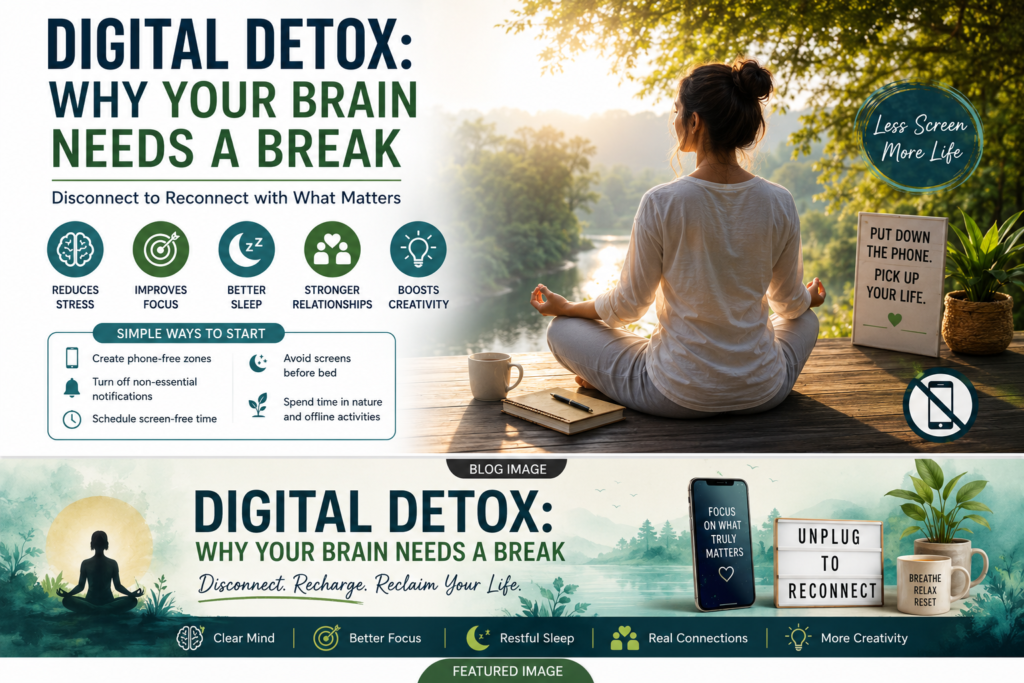
Digital Detox: Why Your Brain Needs a Break
In today’s hyper-connected world, checking your phone has become second nature. Whether it’s scrolling through social media, responding to work emails, watching videos, or browsing the internet, our brains rarely get a chance to rest. While technology has made life easier, constant digital stimulation can leave us feeling mentally exhausted, distracted, and overwhelmed.
This is where a digital detox comes in.
A digital detox doesn’t mean giving up your smartphone or deleting every social media account. Instead, it’s about creating healthier boundaries with technology so your brain can recharge, improve focus, and enjoy more meaningful moments offline.
Let’s explore why your brain needs regular breaks from screens and how you can build healthier digital habits.
What Is a Digital Detox?
A digital detox is the intentional reduction of time spent using digital devices such as smartphones, tablets, computers, televisions, and social media platforms.
The goal isn’t to avoid technology completely—it’s to use it more intentionally.
Think of it like giving your mind a mini vacation from constant notifications, endless scrolling, and information overload.
Why Does Your Brain Need a Break?
Every notification, email, message, and social media update competes for your attention. Over time, this constant stream of information can contribute to mental fatigue.
Research shows that digital environments can positively connect people and improve access to information, but excessive or unhealthy digital use may also contribute to stress, sleep disruption, anxiety, and other mental health challenges. Health organizations encourage healthier digital habits rather than complete disconnection.
Here are some common signs your brain may need a digital break:
- Difficulty concentrating
- Feeling anxious when your phone isn’t nearby
- Constant multitasking
- Trouble sleeping
- Mental exhaustion
- Reduced productivity
- Feeling overwhelmed by notifications
If these sound familiar, you’re not alone.
Benefits of a Digital Detox
1. Improves Focus and Concentration
Every interruption forces your brain to switch tasks. Reducing digital distractions allows you to concentrate for longer periods and complete work more efficiently.
Many people notice they can read books, finish projects, and think more clearly after reducing unnecessary screen time.
2. Reduces Stress and Anxiety
Constant notifications keep your brain in a state of alertness.
Taking scheduled breaks from screens can help lower stress levels and reduce the feeling that you must always be available.
3. Improves Sleep Quality
Using phones before bedtime exposes your eyes to bright light and encourages continued mental stimulation.
Replacing late-night scrolling with reading, meditation, or quiet reflection can make it easier to fall asleep and wake up feeling refreshed.
4. Strengthens Relationships
Have you ever sat with friends or family while everyone looked at their phones?
A digital detox encourages face-to-face conversations and deeper connections.
Simple habits like device-free dinners or phone-free family time can strengthen relationships significantly.
5. Boosts Creativity
When we’re constantly consuming information, our brains have little space to create.
Moments of boredom often lead to new ideas.
Walking without your phone or simply sitting quietly allows your mind to wander creatively.
Simple Ways to Start a Digital Detox
You don’t need to disappear from the internet for a week.
Start small.
Create Phone-Free Zones
Keep phones away from:
- The dining table
- Your bedroom
- Family gatherings
- Meetings
- Study sessions
Turn Off Non-Essential Notifications
Do you really need every shopping app, game, and social media platform sending alerts?
Disable notifications that don’t add value.
You’ll be surprised how much calmer your day feels.
Schedule Screen-Free Time
Choose one hour each day to disconnect.
During that hour:
- Read a book
- Go for a walk
- Exercise
- Journal
- Meditate
- Spend time outdoors
Consistency matters more than duration.
Avoid Screens Before Bed
Try putting your phone away at least 30–60 minutes before sleeping.
Instead:
- Stretch
- Read a physical book
- Practice deep breathing
- Listen to calming music
Your brain will thank you.
Track Your Screen Time
Most smartphones include built-in screen time or digital wellbeing features.
Review your usage once a week.
You may discover that small changes can free up several hours every month.
Digital Detox Doesn’t Mean Quitting Technology
Technology is an incredible tool.
It helps us learn, work, communicate, and stay connected.
The goal isn’t to eliminate technology—it’s to make sure you’re using technology instead of letting it use you.
Healthy digital habits include:
- Using AI and apps to improve productivity
- Following educational content
- Setting app limits
- Taking regular breaks
- Choosing intentional screen time over mindless scrolling
Balance is the key.
Frequently Asked Questions
How long should a digital detox last?
It depends on your goals. Some people start with one hour each day, while others enjoy a screen-free afternoon each weekend. The most effective approach is one you can maintain consistently.
Can a digital detox improve mental health?
A digital detox isn’t a treatment for mental health conditions, but many people find that reducing unnecessary screen time helps improve focus, sleep, and stress management. It works best as part of an overall healthy lifestyle.
Is social media bad?
Not necessarily. Social media can help people stay connected, learn new skills, and build communities. Problems are more likely to arise when use becomes excessive or starts replacing healthy offline activities.
Final Thoughts
Your brain works hard every single day. Giving it regular breaks from constant digital stimulation isn’t about rejecting technology—it’s about protecting your attention, energy, and well-being.
Start with one small change today. Turn off unnecessary notifications, enjoy a phone-free meal, or spend 30 minutes outdoors without checking your screen.
Small habits, repeated consistently, can help you build a healthier relationship with technology and create more space for focus, creativity, and meaningful connections.
Helpful Resources
- Learn about digital environments and mental health from the World Health Organization (WHO).
- Explore evidence-based psychology resources at the American Psychological Association (APA).