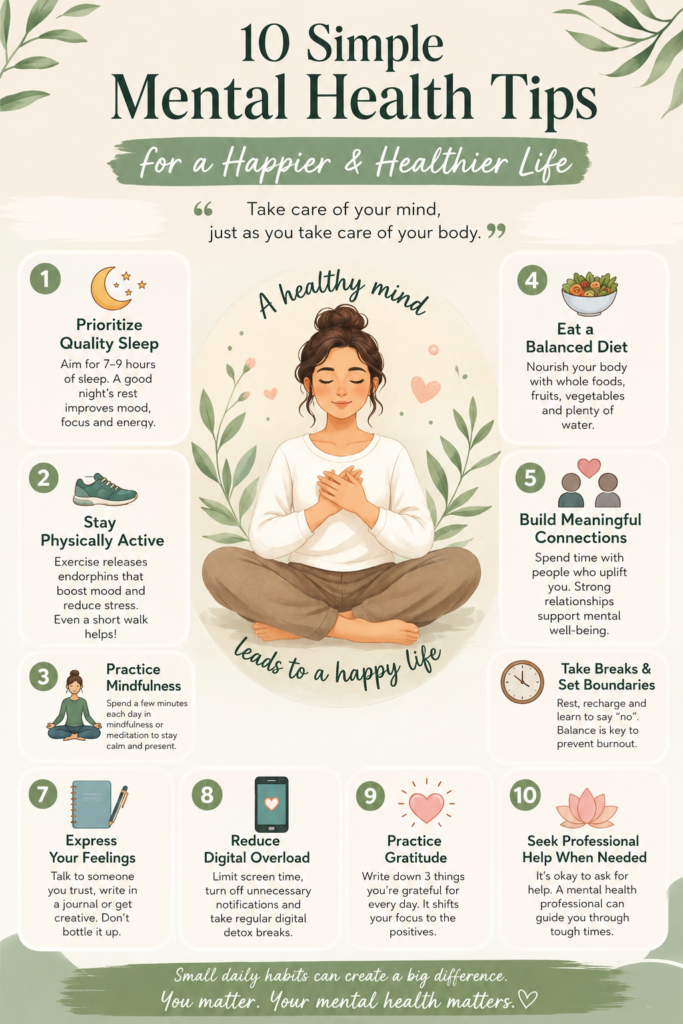
10 Simple Mental Health Tips for a Happier and Healthier Life
In today’s fast-paced world, taking care of our mental health is just as important as looking after our physical health. Daily responsibilities, work pressure, family commitments, and constant exposure to social media can leave us feeling overwhelmed. The good news is that small, consistent habits can make a big difference in improving our emotional well-being.
Here are ten practical mental health tips that anyone can incorporate into their daily routine.
1. Prioritize Quality Sleep
A good night’s sleep is essential for emotional balance and mental clarity. Adults should aim for 7–9 hours of quality sleep each night. Create a relaxing bedtime routine by avoiding screens before bed, limiting caffeine in the evening, and maintaining a consistent sleep schedule.
2. Stay Physically Active
Exercise isn’t just good for your body—it benefits your mind too. Physical activity releases endorphins, often called “feel-good hormones,” which help reduce stress and improve mood. Even a 20–30 minute walk can make a noticeable difference.
3. Practice Mindfulness
Mindfulness helps you stay present and reduces overthinking. Spend a few minutes each day focusing on your breathing, meditating, or simply observing your surroundings without judgment. These practices can help calm the mind and reduce anxiety.
4. Eat a Balanced Diet
The food you eat affects your mood and energy levels. Include plenty of fruits, vegetables, whole grains, lean proteins, and healthy fats in your meals. Stay hydrated throughout the day and try to limit processed foods and excessive sugar.
5. Build Meaningful Connections
Strong relationships provide emotional support during difficult times. Make time to connect with family, friends, or colleagues. A meaningful conversation or shared activity can help reduce feelings of loneliness and improve overall well-being.
6. Take Breaks and Set Boundaries
Working continuously without rest can lead to burnout. Schedule regular breaks during the day, learn to say “no” when necessary, and create healthy boundaries between work and personal life.
7. Express Your Feelings
Bottling up emotions can increase stress. Talk to someone you trust, write in a journal, or engage in creative activities like drawing, painting, or music. Expressing your feelings can provide relief and improve emotional resilience.
8. Reduce Digital Overload
Constant notifications and excessive screen time can contribute to stress and anxiety. Consider setting specific times to check social media, turning off unnecessary notifications, and enjoying regular digital detox periods.
9. Practice Gratitude
Focusing on positive aspects of life can shift your mindset. Each day, write down three things you’re grateful for. This simple habit can increase happiness, reduce stress, and improve emotional well-being over time.
10. Don’t Hesitate to Seek Professional Help
Everyone experiences difficult periods in life. If feelings of sadness, anxiety, or stress persist and begin affecting your daily activities, reaching out to a mental health professional is a sign of strength—not weakness. Early support can make a significant difference.
Final Thoughts
Mental health is an ongoing journey, not a destination. Small daily habits practiced consistently can have a lasting impact on your emotional well-being. Remember that it’s okay to have difficult days, and it’s equally important to ask for help when needed.
Take one step today—whether it’s going for a walk, calling a friend, practicing mindfulness, or simply getting enough rest. Every positive action you take is an investment in a healthier, happier you.
Remember: Taking care of your mind is one of the most valuable forms of self-care. Prioritize your mental well-being because a healthy mind creates the foundation for a fulfilling life.